What Kind of River Is the Salt River?
The Upper Salt River is a whitewater river, meaning it moves fast, drops steeply, and has named rapids. It’s not a lazy float trip. But it’s also not an extreme expedition reserved for seasoned paddlers. It sits in a sweet spot that makes it genuinely accessible to first-timers while still delivering real adrenaline.
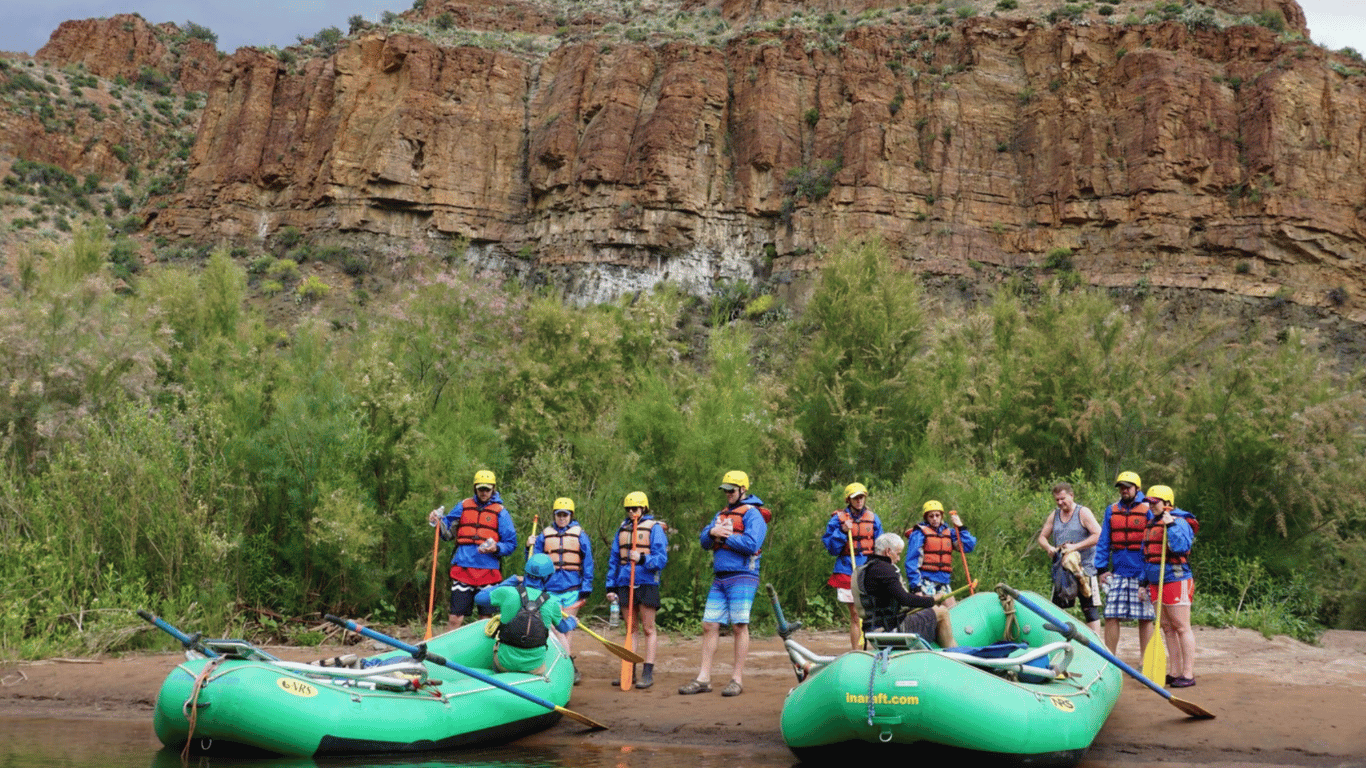
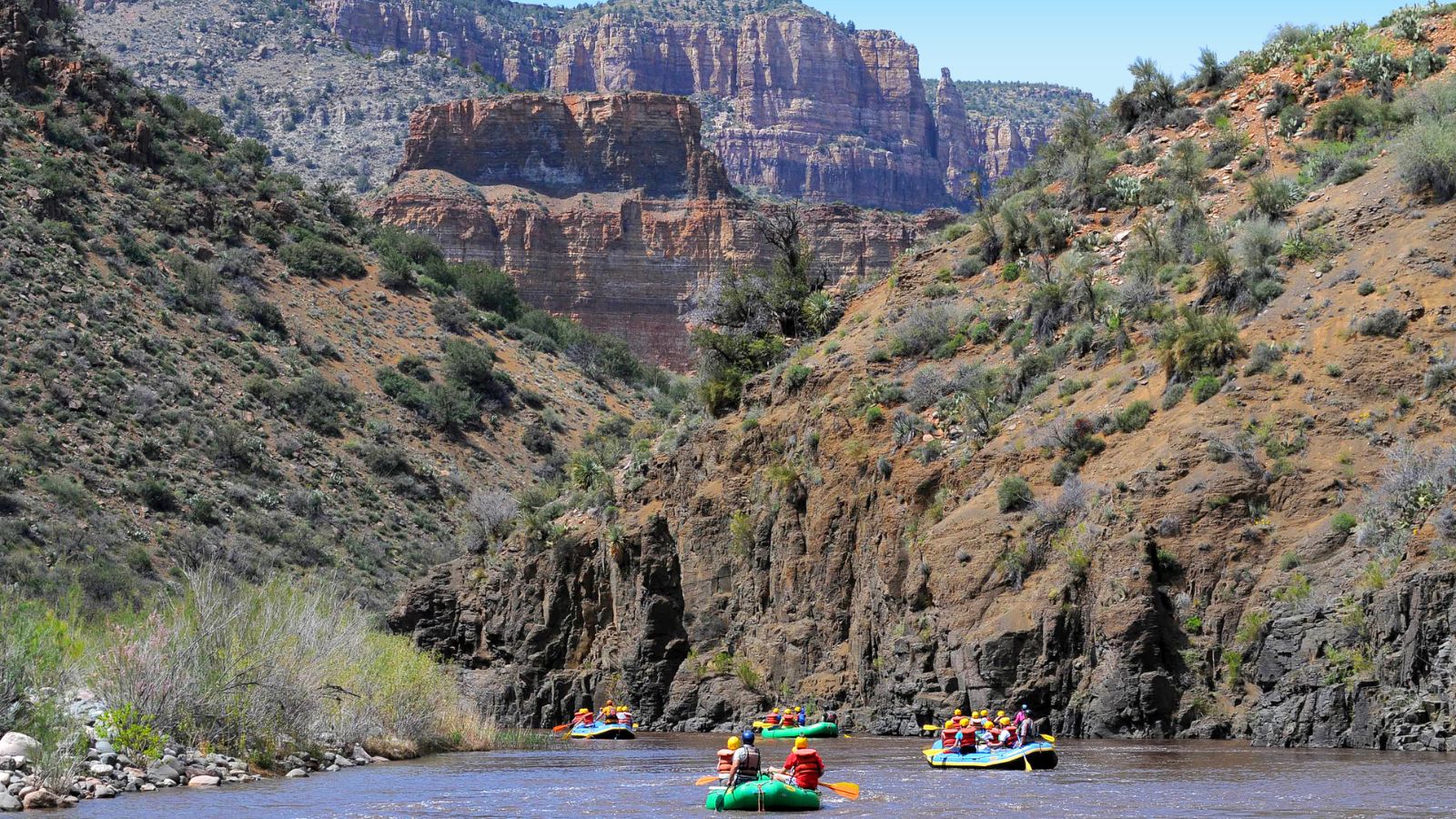
The river drops an average of 25 feet per mile over more than 50 miles of canyon, which is what creates the consistent, exciting rapids you’ll find throughout the day. The canyon walls climb hundreds of feet above you, the water runs cold and clear, and the scenery shifts between towering saguaro-studded cliffs, cottonwood groves, and narrow rock corridors that open suddenly into wide desert beaches.
It’s completely remote. There are no roads along the river, no cell service, no crowds from other boats. When you’re on the Salt River, you’re in wilderness.
The Salt River at a Glance
|
How Hard Are the Rapids? What Class Are They?
The Salt River runs Class II through Class IV rapids depending on current water levels, with most day trips encountering a mix of Class III and IV. Here’s what that actually means in practical terms:
- Class II: Easy and fun. You’ll be paddling, reading the water a little, and moving with the current. Great for getting your technique and your nerves settled.
- Class III: More technical. You’ll be actively paddling, following your guide’s instructions, and navigating around rocks and through channels. This is where most guests find their stride. Exciting but completely manageable.
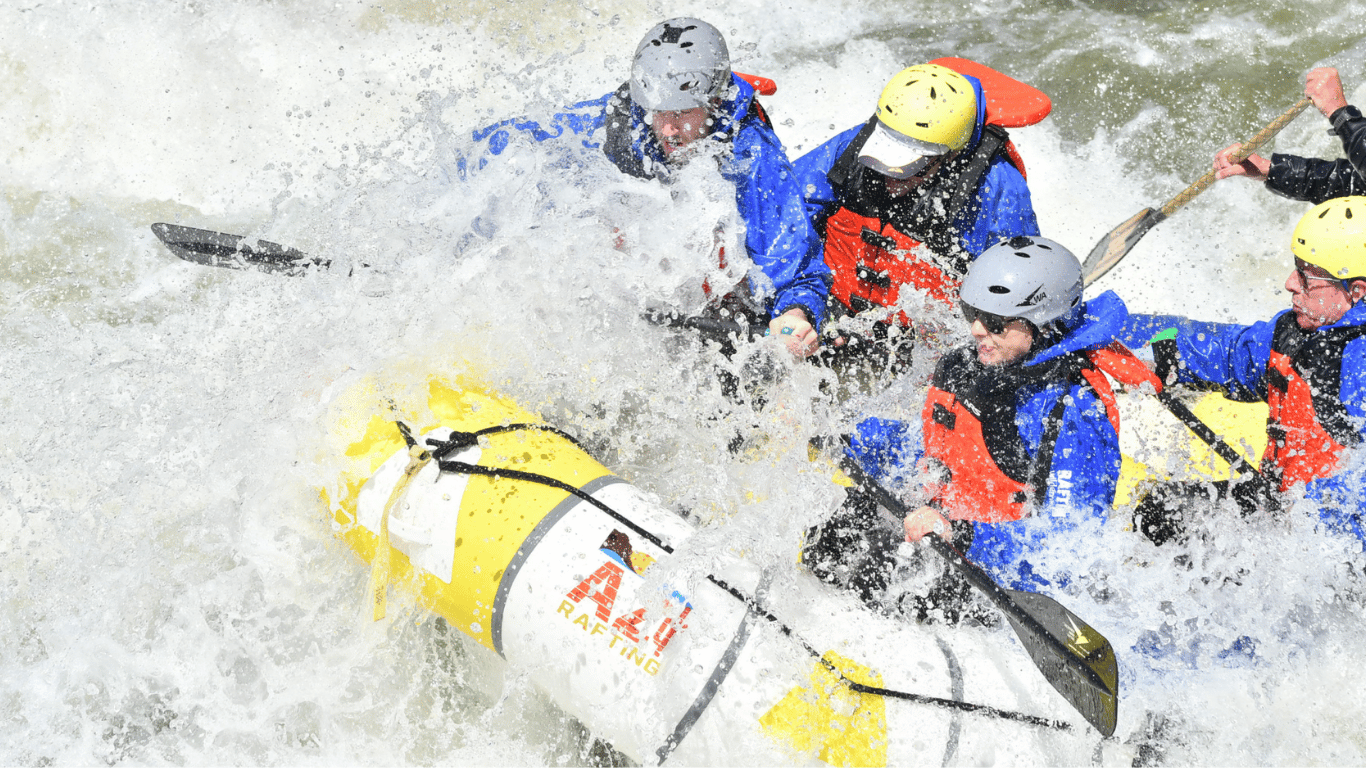
- Class IV: The highlight rapids. Strong currents, bigger drops, faster water. Your guide will brief you on each one before you run it. Most first-timers describe these as their favorite moments of the day. The combination of teamwork, adrenaline, and relief when you come out the other side is hard to beat.
The rapid names tell you something about the river’s character: Quartzite Falls, Eye of the Needle, Black Rock. These aren’t decorative. They describe real features. Your guide will walk you through each one before you run it and tell you exactly what to do.
One important note: the difficulty of the rapids increases with water level. A high-flow year produces more powerful Class IV conditions. A lower-flow year feels more like consistent Class III. Either way, your guide team will adjust the briefing and the plan to match current conditions.
Do I Need Any Experience to Go Rafting on the Salt River?
No prior rafting experience is required. The Salt River is appropriate for beginners on our half-day and full-day trips, with a minimum age of 8 years old for most trips.
What matters more than experience is a willingness to follow your guide’s instructions and a basic level of physical fitness. You’ll be paddling for several hours, so you should be comfortable with moderate physical activity. You don’t need to be an athlete, but guests who are active and reasonably fit will have an easier time.
The most important thing a first-timer can do is listen to the safety briefing at the start of the day. Our guides have run these rapids hundreds of times. They know every line, every hazard, and every recovery spot. Trust them, paddle when they tell you to paddle, and hold on when they tell you to hold on.
Good to Know: First-Timer Requirements
|
What Trip Length Should a First-Timer Choose?
This is the most common question we hear from people booking their first Salt River trip. The honest answer depends on what kind of adventure you’re looking for.
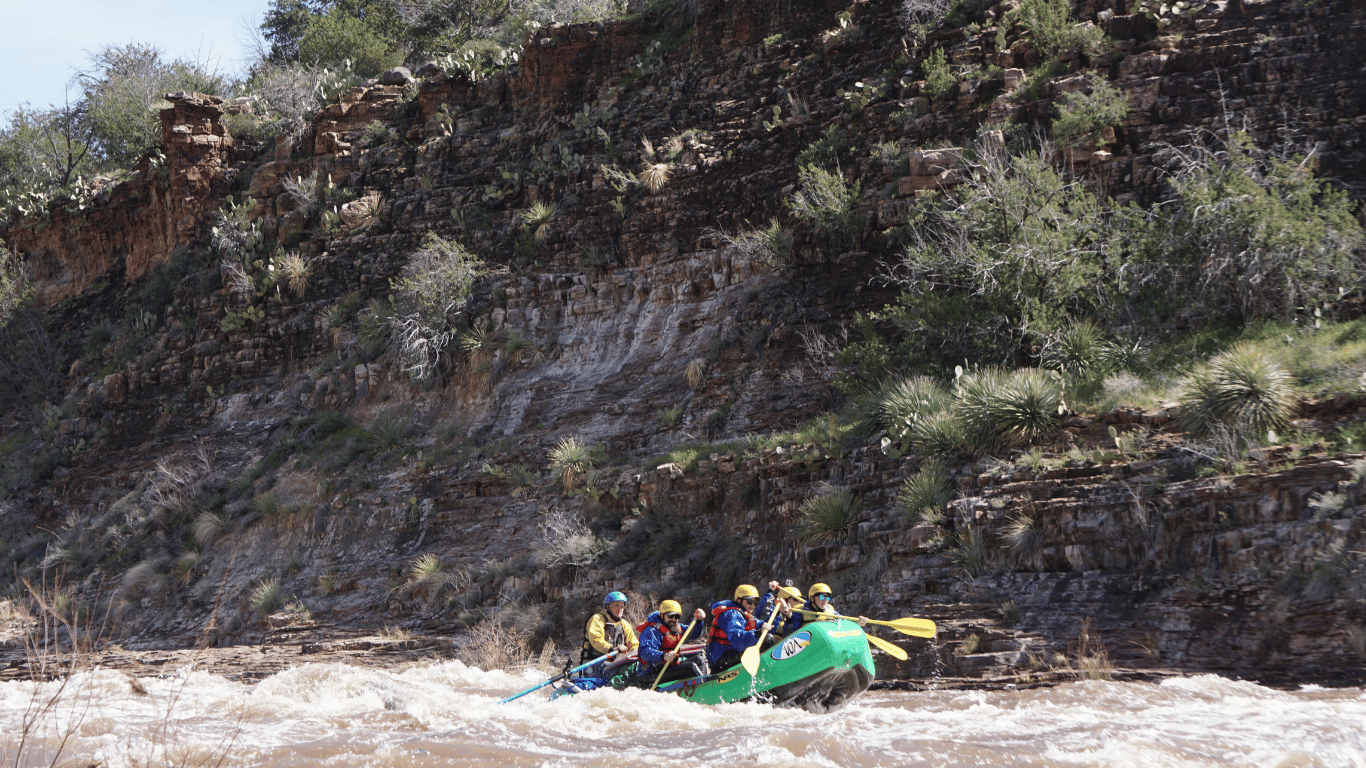
Half-Day Trip (~4–5 hours on the water)
The half-day is a great introduction to the Salt River. You’ll run some of the most exciting rapids on the upper stretch of the river, experience the canyon scenery, and be done by early afternoon. It’s the right choice if you’re testing the waters (literally), bringing younger kids, or working within a tighter schedule.
Full-Day Trip (~8–9 hours on the water)
The full-day trip is our most popular option and the one we recommend for most first-timers who are physically active and genuinely want the full experience. You’ll cover more of the river, run more rapids, stop for a riverside fajita lunch prepared by your guide team, and hike into a side canyon if conditions allow. By the end of the day you’ll feel like you’ve actually been somewhere, because you have.
Multi-Day Trips (2–5 days)
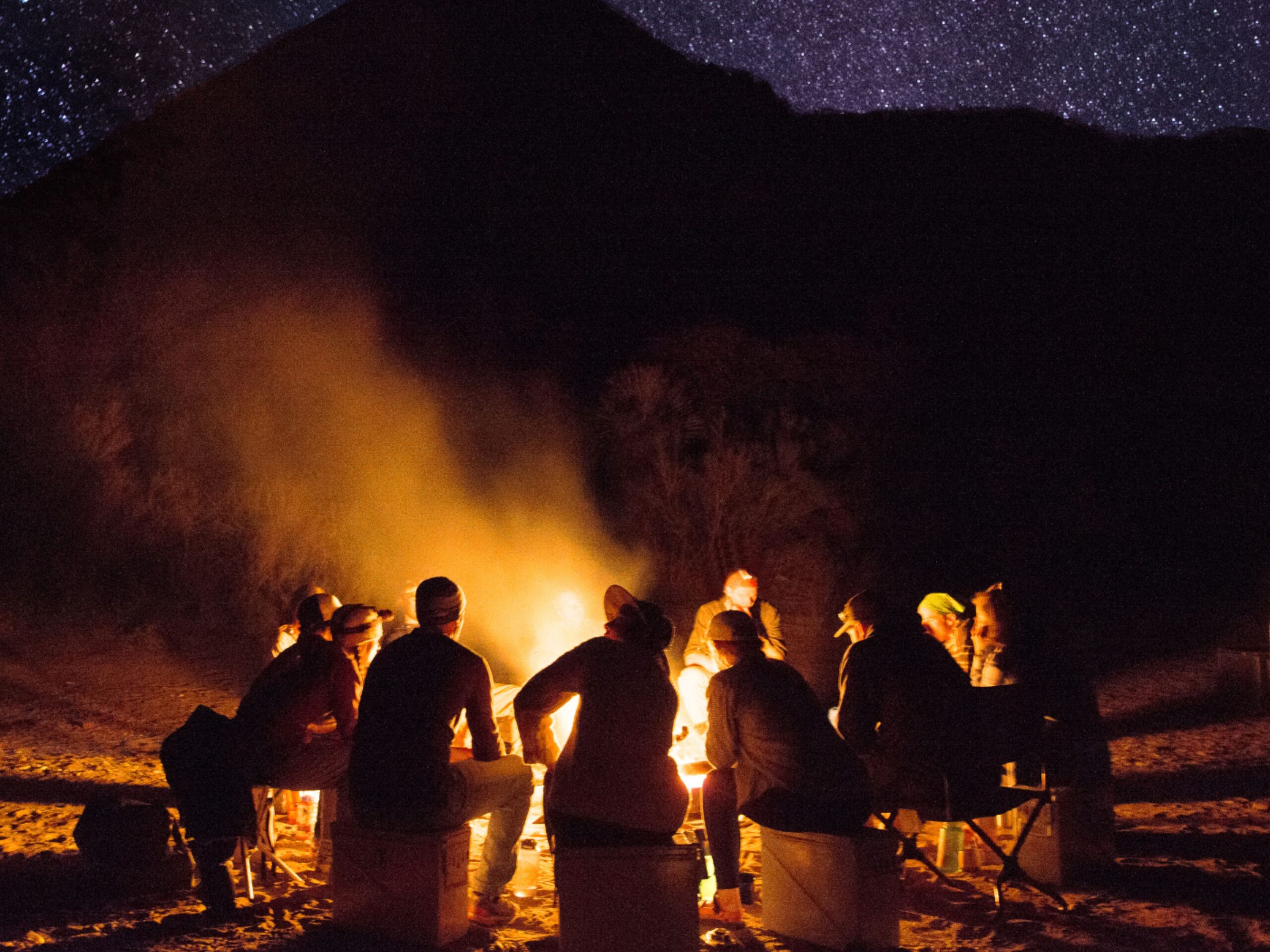
If you want to go deeper, literally and figuratively. The Salt River’s multi-day trips are in a category of their own. You’ll camp on remote river beaches accessible only by raft, spend evenings watching the canyon walls change color at sunset, and experience parts of the river that day-trippers never see. These trips are appropriate for first-timers who are comfortable outdoors and want more than a day adventure.
What to Expect on the Day of Your Trip
Here’s a practical walkthrough of what your first day on the Salt River actually looks like from arrival to takeout.
Getting There
The Salt River put-in is located in the Salt River Canyon, about 45 minutes north of Globe, Arizona on US-60. There are no other landmarks to help you navigate once you’re off the highway, so follow the directions from Arizona Rafting precisely. Most guests from Phoenix drive about 2 hours; Tucson guests should budget closer to 3 hours. Give yourself extra time on your first trip.
Check-In and Safety Briefing
When you arrive, you’ll check in with the Arizona Rafting team, sign your waiver if you haven’t already, and get fitted for a life jacket and helmet. Then comes the safety briefing. Don’t treat this casually. The briefing covers paddle commands, what to do if you fall out, and how to position yourself in the raft. It’s the most important 15 minutes of the day.
On the Water
Once you launch, the river takes over. Your guide will call commands: forward paddle, back paddle, get down. You’ll work as a team to navigate each rapid. Between rapids, you’ll float through quiet stretches of canyon, catch your breath, and take in scenery that most people never see.
For full-day trips, lunch is served riverside: hot fajitas prepared by your guide team, with options for most dietary needs. Plan to be surprised by how good it tastes after a morning on the river.
Takeout and Shuttle
At the end of the trip, the rafts pull out at the designated takeout point and you’ll be shuttled back to the put-in where your vehicle is parked. The shuttle ride gives you time to start reliving the day with your group before you even get home.
What to Wear and What to Pack
Packing right makes a real difference. Here’s what experienced Salt River guests bring:
What to Wear
- Swimsuit: You will get wet. Wear a swimsuit under everything else.
- Quick-dry shorts or pants: Avoid cotton, which stays wet and cold. Synthetic fabrics are your friend.
- Secure footwear: Water sandals with straps, water shoes, or old sneakers. Flip-flops will fall off in a rapid.
- Sun protection: Long-sleeve sun shirt, hat with a chin strap, sunglasses with retention strap. The canyon amplifies sun exposure and you’ll be on the water for hours.
- Wetsuit (cooler months): We provide wetsuits when water temperatures require them. Check with us before your trip.
What to Pack
- Water: Minimum 2 liters. The desert is dry and the river is physical.
- Sunscreen: Reef-safe, water-resistant, and apply before you get to the river.
- Dry bag: For your phone, keys, and anything you don’t want soaked. We provide dry bags for most trips.
- Snacks: For half-day trips especially. On full-day trips, lunch is included.
- Cash: For tips for your guides. If they took good care of you, they’ll appreciate it.
What to Leave Behind
- Anything irreplaceable. Leave your good camera and expensive jewelry in the car
- Cotton clothing
- Flip-flops or open sandals without straps
- Heavy packs. Keep it light
For the complete gear list: Arizona Rafting Packing Lists →
What Will I See Along the Way?
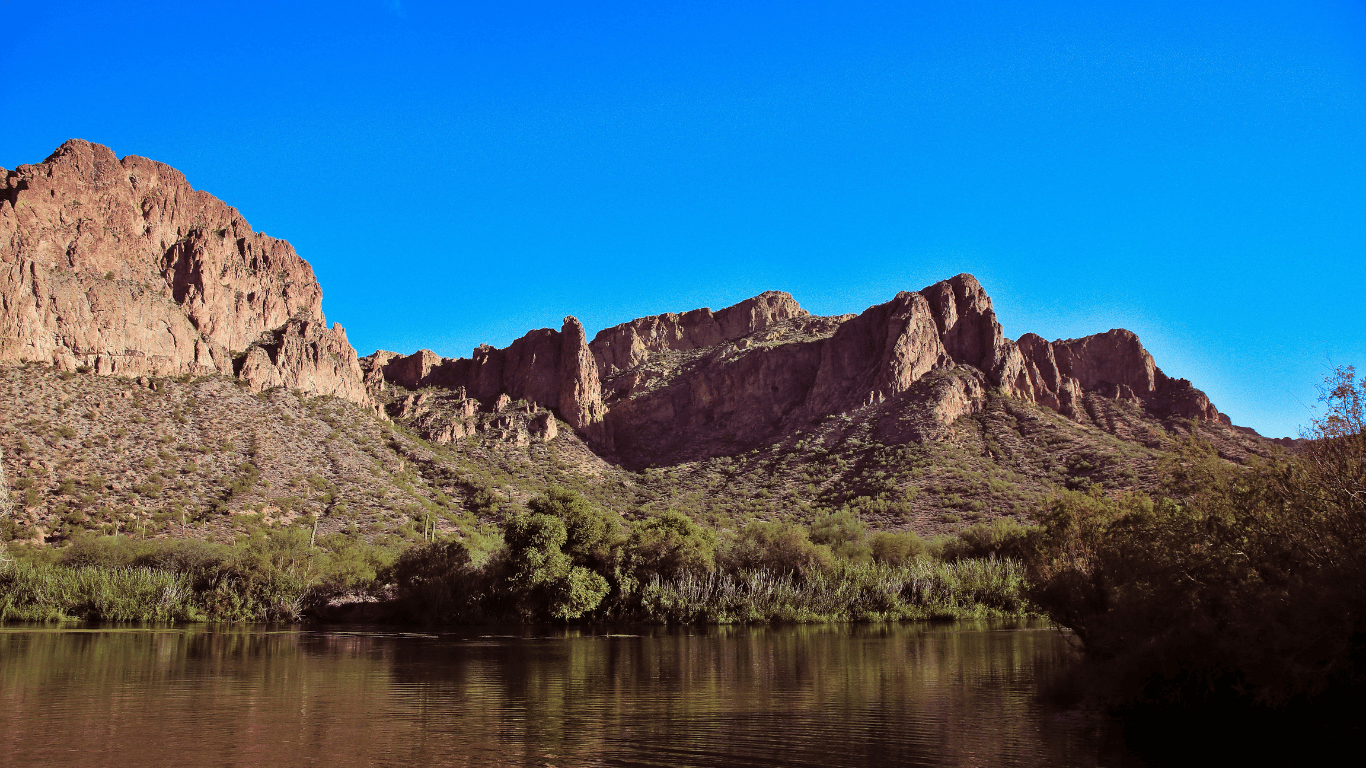
The Salt River Canyon is one of Arizona’s least-visited and most spectacular landscapes. First-timers are almost always surprised by how remote and wild it feels, even people who grew up in Phoenix didn’t know this existed.
Canyon Geology
The canyon walls rise hundreds of feet above the river, exposing layers of Precambrian quartzite, schist, and granite that are among the oldest exposed rock formations in North America. The colors shift throughout the day as the light changes: rust, amber, gray, and black. The walls close in dramatically at certain points of the river.
Wildlife
The Salt River corridor is a wildlife haven tucked inside the desert. Keep your eyes on the canyon walls and sky for bald eagles and golden eagles, which nest along the upper canyon. Great blue herons stalk the shallows in the calmer stretches. Mule deer are commonly seen at dawn and dusk, and the Salt River wild horse herds, a protected population of free-roaming horses, occasionally appear along the canyon edges. Seeing them from the water is one of those moments guests don’t forget.
Plant Life
The canyon marks a dramatic transition between two ecosystems. The upper stretches move through oak and juniper woodland. As you descend into the lower canyon, the vegetation shifts to classic Sonoran Desert: giant multi-armed saguaro cactus, prickly pear, cholla, and cottonwood groves lining the river’s edge. The contrast is visually striking and botanically fascinating.
Side Canyons
Several tributary canyons branch off the main river corridor, revealing lush microhabitats that feel like secret oases. On full-day and multi-day trips, your guide may lead you on a short hike into one of these canyons, places with hanging gardens, seasonal waterfalls, and the kind of stillness that’s hard to find anywhere.
Is Salt River Rafting Safe for Beginners?
Yes, with the right preparation and the right guide team. Safety is the foundation of how Arizona Rafting operates, and our guides are trained to make sure first-timers have both a great experience and a safe one.
Every guest wears a USCG-approved life jacket and a properly fitted helmet. Every guide is trained in swift water rescue, CPR, and wilderness first aid. Before you run any significant rapid, your guide will brief your boat on the line, the hazards, and what to do if things don’t go as planned.
The main thing you can do to stay safe is follow your guide’s instructions, especially the paddle commands. Guests who paddle when told to paddle and hold on when told to hold on have a dramatically better experience and stay in the boat.
Safety Equipment Provided on Every Trip
|
When Does the Salt River Run?
This is the question we get asked more than any other, and the honest answer is: it depends on the winter.
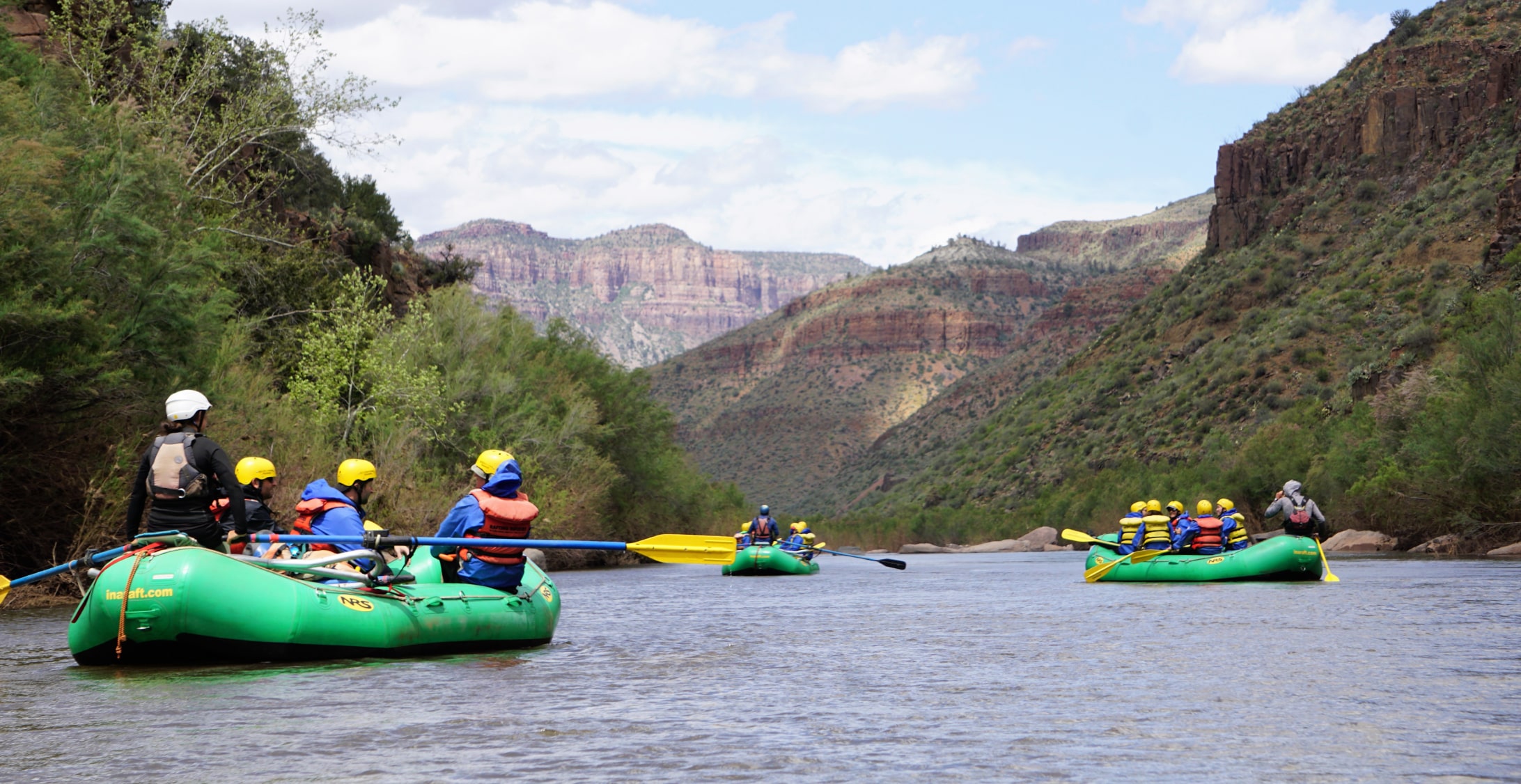
The Salt River runs on snowmelt from the White Mountains of eastern Arizona. When Arizona gets a strong snowpack winter, typically once every few years, the river produces enough flow to run safely from approximately March through May. In lighter snowpack years, the season may be shortened, delayed, or skipped entirely.
This rarity is part of what makes the Salt River so special. When it runs, it’s a genuine event, something that seasoned outdoor enthusiasts in Arizona plan their springs around. Guests who have been waiting for a good flow year treat it like a reunion.
Check current conditions and flow data: Salt River Water Flow Report →
How to Book Your 2027 Salt River Trip
Join the Waitlist
The 2026 season is not running and the Salt River doesn’t run every year. When it does, it’s one of those experiences that people talk about for years afterward, not just because of the rapids, but because of the whole picture: the canyon, the wildlife, the remoteness, the team effort, the fajitas on the river bank, the exhausted satisfaction at the end of the day.
Join the 2027 season waitlist to be notified the moment bookings open. You’ll get first access to dates before they’re announced publicly. Because when the Salt River runs, spots go quickly.
Or explore all available trip lengths below: