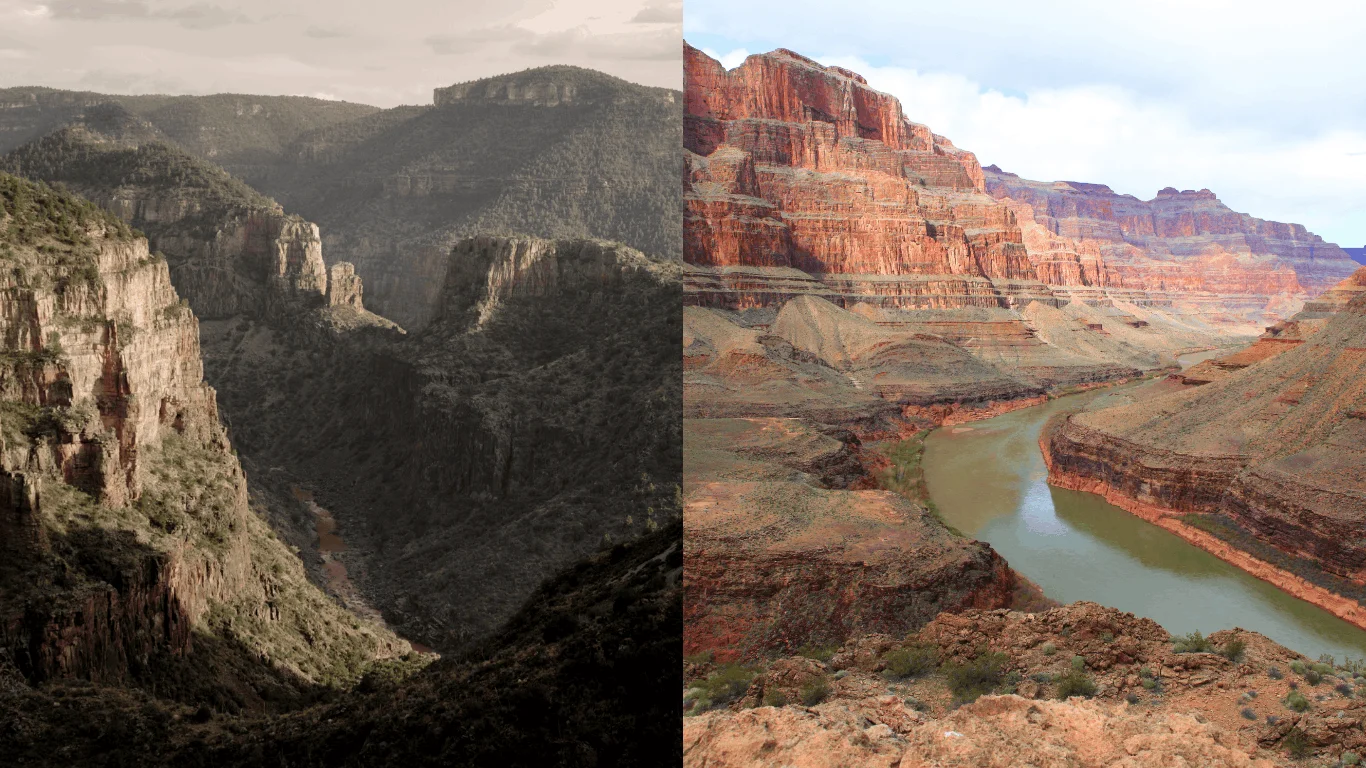
Arizona is home to some of the most spectacular canyon landscapes in the Southwest. The Grand Canyon is undoubtedly the state’s most famous natural landmark, drawing visitors from around the world to its enormous cliffs, colorful rock layers, and sweeping overlooks. But farther southeast, Salt River Canyon offers a different kind of canyon adventure, with winding mountain roads, rugged desert scenery, and whitewater rapids running through its depths.
Often called Arizona’s “Mini Grand Canyon,” Salt River Canyon shares some visual similarities with its much larger counterpart. However, the two destinations offer distinctly different experiences.
If you’re comparing Salt River Canyon vs. the Grand Canyon for an upcoming Arizona trip, here’s what makes each one worth visiting, what you can do at both, and how to decide which destination belongs on your itinerary.
Salt River Canyon vs. Grand Canyon: At a Glance
The biggest difference between Salt River Canyon and the Grand Canyon is their scale and how visitors experience them. The Grand Canyon is known for its enormous size, extensive viewpoints, and established national park attractions. Salt River Canyon is smaller and less developed, offering a more remote experience, particularly for visitors exploring the canyon by raft.
| Feature | Salt River Canyon | Grand Canyon |
|---|---|---|
| Location | East-central Arizona, near Globe | Northern Arizona |
| River | Salt River | Colorado River |
| Canyon depth | More than 1,000 feet in some areas | More than 6,000 feet at its deepest |
| Main attractions | Scenic drives, whitewater rafting, desert landscapes | Panoramic overlooks, hiking, sightseeing, rafting |
| Visitor experience | Remote, rugged, fewer developed facilities | Established national park with extensive visitor infrastructure |
| Whitewater rafting | Seasonal, typically spring, depending on snowmelt | Multi-day river trips with advance planning |
| Time needed | A scenic stop, day trip, or longer rafting adventure | A full day to several days |
| Best for | Adventure seekers, road trippers, and travelers seeking less-developed scenery | First-time Arizona visitors, hikers, photographers, and national park enthusiasts |
Both canyons are worth experiencing, but they offer different perspectives on Arizona’s landscape.
What Makes Salt River Canyon Unique?
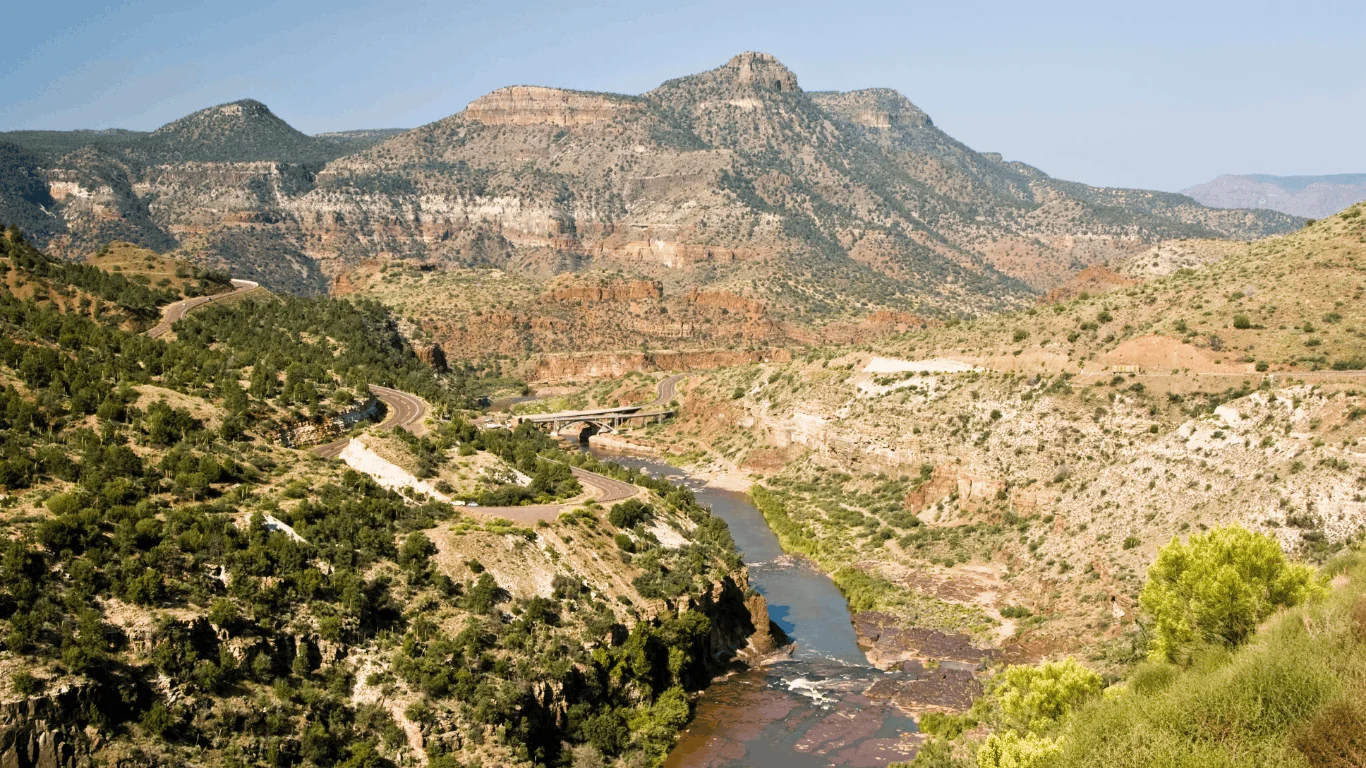
Located in east-central Arizona between Globe and Show Low, Salt River Canyon is one of the state’s most impressive natural landscapes. U.S. Highway 60 winds down into the canyon, offering views of rugged cliffs, desert vegetation, and the Salt River far below.
Although Salt River Canyon is often compared to the Grand Canyon, its appeal goes beyond the nickname.
A More Remote Canyon Experience
One of Salt River Canyon’s biggest draws is its relatively undeveloped landscape. Unlike the Grand Canyon’s South Rim, you won’t find a large visitor village, extensive shuttle system, or numerous developed overlooks.
Instead, much of the experience revolves around the natural landscape itself.
The highway provides an accessible introduction to the canyon, but beyond the road crossing, long stretches of the Upper Salt River wind through remote country with limited road access. For visitors interested in exploring beyond the usual sightseeing stops, that remoteness is a major part of the attraction.
The canyon also lies within the ancestral and present-day homelands of Western Apache people, including the White Mountain Apache Tribe and San Carlos Apache Tribe. Its cultural significance is an important part of understanding the region, alongside its geology and natural scenery.
Whitewater Rafting Through the Canyon
While the Grand Canyon is famous for its overlooks, one of the most memorable ways to experience Salt River Canyon is from the water.
The Upper Salt River offers exciting Class III and IV whitewater when spring runoff provides suitable flows. Rafting trips take guests through a landscape of towering canyon walls, rocky rapids, and stretches of river that feel far removed from Arizona’s busy cities. The river has also played an important role in the history of Salt River Canyon, adding another layer of significance to the landscape.
Depending on the section and trip, the experience can include:
-
Navigating exciting rapids with experienced river guides.
-
Seeing canyon walls and rock formations from river level.
-
Watching for wildlife, including birds of prey and desert bighorn sheep.
-
Experiencing a remote stretch of Arizona that isn’t easily accessible by road.
Unlike the regulated flows associated with many Colorado River rafting trips, the Upper Salt River’s rafting season depends heavily on winter snowpack, spring temperatures, and runoff conditions.
Salt River rafting is generally a spring activity, not a year-round attraction. Some years offer an extended window of runnable flows, while others may have a short season or insufficient water for trips.
A Scenic Drive Worth Taking
You don’t have to book a rafting trip to appreciate Salt River Canyon.
The drive along Highway 60 between Globe and Show Low is an attraction in itself, with dramatic elevation changes, tight curves, and expansive views of the surrounding mountains and canyon.
The steep cliffs and colorful rock formations are part of what earned Salt River Canyon its nickname, Arizona’s Mini Grand Canyon. Although the canyon is considerably smaller than the Grand Canyon, the scenery is impressive in its own right.
Travelers can stop at appropriate designated pullouts to photograph the landscape and take in the views. Road conditions can change with weather, so it’s worth checking AZ511 before traveling, especially during winter or after storms.
What Makes the Grand Canyon Unique?
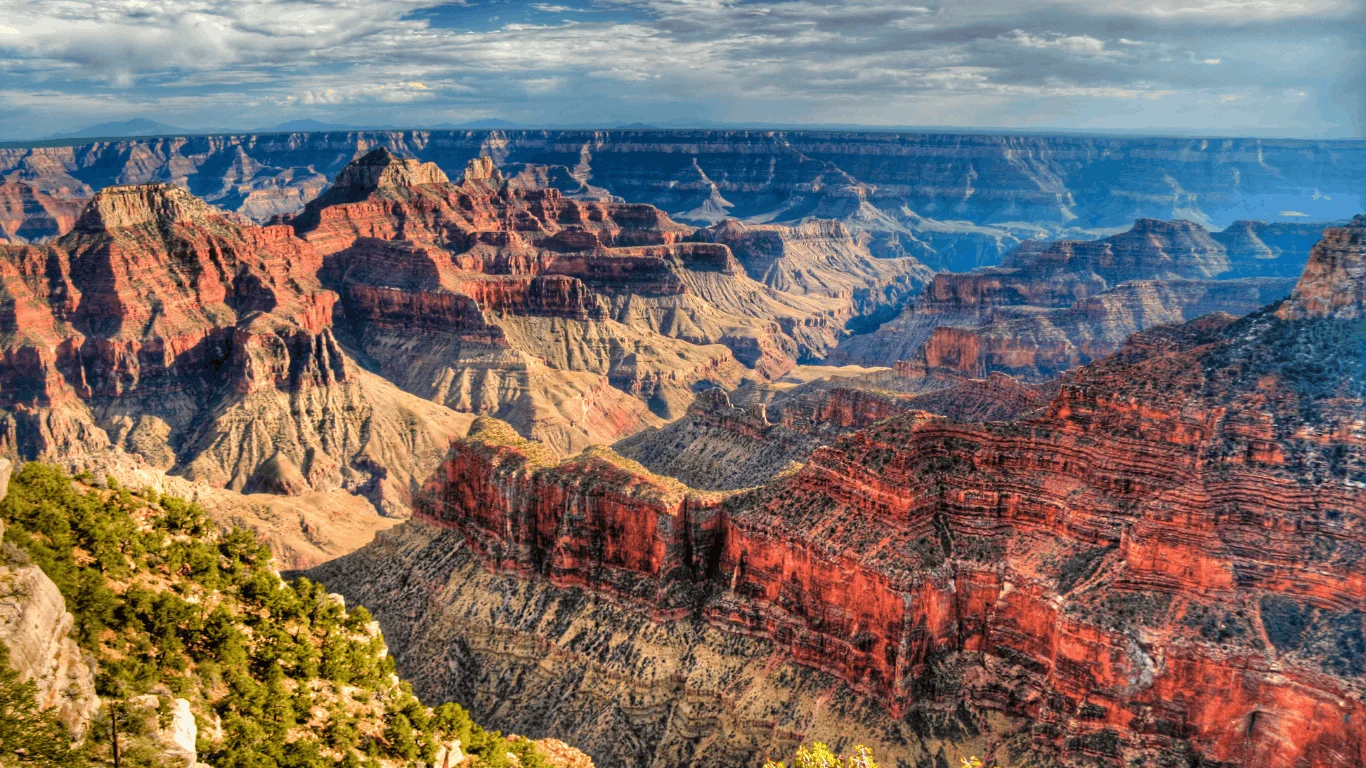
The Grand Canyon is one of the world’s most recognizable natural landmarks, stretching approximately 277 miles through northern Arizona. Carved by the Colorado River and shaped by millions of years of erosion and geologic processes, the canyon reveals an extraordinary record of Earth’s history.
Its size alone sets it apart from Salt River Canyon, but there are several other reasons it remains such a popular destination.
Enormous Views and Iconic Overlooks
The Grand Canyon is famous for its panoramic views, with layers of red, orange, and tan rock extending toward the horizon.
At the South Rim, visitors can explore established viewpoints such as Mather Point, Yavapai Point, and Desert View. Many are accessible by car, shuttle, or relatively short walks, making the canyon’s scenery available to travelers with different interests and abilities.
For first-time visitors to Arizona, standing at the rim and looking across the canyon is an experience that’s difficult to replicate anywhere else.
Extensive Hiking Opportunities
The Grand Canyon offers a much more developed hiking network than Salt River Canyon, with options ranging from relatively easy walks along the Rim Trail to strenuous descents into the canyon.
Popular routes include Bright Angel Trail and South Kaibab Trail, both of which offer impressive views but require careful preparation. The National Park Service provides detailed information about Grand Canyon day hiking routes, including trail distances, difficulty, and safety considerations.
Hiking below the rim can be especially challenging during summer, when temperatures inside the canyon can exceed 100°F. Even experienced hikers should account for elevation changes, limited shade, and the strenuous climb back to the rim.
Multi-Day Colorado River Rafting Adventures
The Grand Canyon also offers incredible whitewater rafting, although the experience is quite different from rafting the Upper Salt River.
Colorado River trips through the Grand Canyon are typically multi-day adventures, often requiring significant advance planning. Depending on the trip, visitors may spend several days or multiple weeks traveling through the canyon, camping along the river, and navigating major rapids.
These trips provide access to some of the Grand Canyon’s most remote areas, but they generally require a greater time commitment than a Salt River day rafting trip.
For travelers who want to experience Arizona canyon whitewater without committing to an extended expedition, Salt River Canyon can be an appealing alternative.
Which Canyon Is Better for Whitewater Rafting?
Both Salt River Canyon and the Grand Canyon offer memorable whitewater rafting experiences, but the biggest difference is how much time you’ll need to spend on the river.

Salt River Canyon: Half-Day, Full-Day, and Multi-Day Trips
Salt River Canyon is an excellent option for travelers who want exciting whitewater without necessarily committing to a weeklong expedition.
With Arizona Rafting, you can choose from several trip lengths:
-
Half-Day Rafting: A shorter introduction to Class III–IV whitewater, with beautiful canyon scenery along the way.
-
Full-Day Rafting: A longer adventure featuring more rapids, a hot riverside fajita lunch, and opportunities to explore the canyon.
-
Multi-Day Rafting: Extended wilderness trips ranging from two to five days, with riverside camping and access to more remote stretches of the canyon.
These trips generally operate between March and May, depending on river conditions. Because the Upper Salt relies heavily on seasonal runoff, availability varies from year to year.
You can check the latest Salt River water flow and conditions before planning your adventure.

Grand Canyon: Extended River Expeditions
Rafting the Colorado River through the Grand Canyon is a different undertaking. Many commercial trips last a week or longer, taking guests through major rapids and remote sections of the canyon.
The National Park Service’s Grand Canyon visitor information explains that river expeditions can last anywhere from several days to three weeks, depending on the itinerary.
For travelers who want to experience Arizona whitewater but have only a day or two available, the Upper Salt River may be a more practical option.
Which Canyon Is Easier to Visit from Phoenix?
For travelers starting in Phoenix, Salt River Canyon is generally the closer destination.
Approximate driving times; actual travel depends on starting point, traffic, weather, and road conditions.
| Destination | From Phoenix |
|---|---|
| Salt River Canyon (Highway 60 river crossing) | About 2–2.5 hours |
| Grand Canyon South Rim | About 3.5–4.5 hours |
Salt River Canyon is particularly convenient for travelers exploring Globe, the White Mountains, or eastern Arizona. Its location makes it possible to plan a scenic drive or rafting adventure without spending most of the day traveling.
The Grand Canyon South Rim requires a longer drive but offers extensive visitor facilities, restaurants, lodging, and designated sightseeing areas.

When Is the Best Time to Visit Each Canyon?
The ideal time to visit depends on what you want to do.
Salt River Canyon
Salt River Canyon offers scenic views throughout much of the year, but rafting is highly seasonal.
-
Spring: The primary whitewater rafting season, when snowmelt from the White Mountains can produce exciting river flows. Conditions vary annually.
-
Summer: Scenic drives remain possible, but extreme heat can make outdoor activities uncomfortable or dangerous.
-
Fall: Cooler temperatures can make sightseeing and scenic drives more enjoyable.
-
Winter: The canyon can be beautiful in cooler weather, although snow and ice may affect higher-elevation roads.
For travelers interested in rafting, spring is the season to plan around. Keep in mind that a typical rafting calendar doesn’t guarantee runnable flows in any particular year.
Grand Canyon
The Grand Canyon offers year-round sightseeing at the South Rim, although seasonal conditions can affect access and activities.
-
Spring: Often comfortable for sightseeing and hiking, with variable weather.
-
Summer: Popular for sightseeing, but extreme heat below the rim makes hiking particularly challenging.
-
Fall: Cooler weather and excellent opportunities for hiking and photography.
-
Winter: Snow-covered canyon views are possible at the South Rim, with fewer visitors and potential road or trail closures.
The North Rim operates on a more limited seasonal schedule, and access can be affected by weather, fires, and other closures. Check the Grand Canyon National Park visitor information for current conditions.
Salt River Canyon or Grand Canyon: Which Should You Choose?
Both destinations are worth visiting, but the right choice depends on the experience you’re hoping to have.
Choose Salt River Canyon if you:
-
Want to experience Arizona’s canyon scenery away from major tourist destinations.
-
Are interested in Class III–IV whitewater rafting.
-
Have limited time and are traveling from Phoenix or eastern Arizona.
-
Enjoy scenic drives through rugged, less-developed landscapes.
-
Want a guided river adventure with half-day, full-day, or multi-day options.
Choose the Grand Canyon if you:
-
Want to see one of America’s most famous natural landmarks.
-
Are interested in panoramic viewpoints and extensive hiking opportunities.
-
Prefer established visitor facilities and national park amenities.
-
Have several days available to explore.
-
Want to plan an extended Colorado River rafting expedition.
Of course, there’s no reason you can’t visit both. Each canyon reveals a different part of Arizona’s landscape, and experiencing them together provides an even greater appreciation for the state’s remarkable geography.
Experience Arizona’s Salt River Canyon from the Water
The Grand Canyon deserves its reputation as one of the most impressive natural landmarks in the world. But Salt River Canyon offers an adventure of its own, with rugged scenery, exciting rapids, and stretches of wilderness that are best explored from a raft.
If you’re planning a spring visit to Arizona, consider experiencing the canyon from river level. Arizona Rafting offers guided Upper Salt River trips ranging from half-day outings to multi-day expeditions, with options for first-time rafters and experienced adventurers alike.
Explore our Salt River whitewater rafting trips and see what makes Arizona’s Mini Grand Canyon such a memorable place to paddle.
Frequently Asked Questions About Salt River Canyon vs. Grand Canyon
Is Salt River Canyon part of the Grand Canyon?
No. Salt River Canyon and the Grand Canyon are two separate canyon systems in Arizona. Salt River Canyon is located in east-central Arizona and was carved by the Salt River, while the Grand Canyon is located in northern Arizona and was carved by the Colorado River and its tributaries.
Why is Salt River Canyon called the Mini Grand Canyon?
Salt River Canyon is nicknamed Arizona’s “Mini Grand Canyon” because of its steep canyon walls, colorful rock formations, and dramatic views. Although it is considerably smaller than the Grand Canyon, its rugged scenery creates a similar visual impression in places. The nickname doesn’t mean the two canyons have identical geology.
Is Salt River Canyon worth visiting if you’ve already seen the Grand Canyon?
Yes. Salt River Canyon offers a different experience, particularly for visitors interested in scenic driving or whitewater rafting. While the Grand Canyon is known for its enormous overlooks, Salt River Canyon offers opportunities to explore a remote river corridor and experience Arizona’s landscape from the water.
Can you raft both Salt River Canyon and the Grand Canyon?
Yes. The Upper Salt River offers seasonal guided whitewater trips ranging from half-day outings to multi-day adventures. The Colorado River through the Grand Canyon is primarily explored through longer rafting expeditions requiring more advance planning.
How far is Salt River Canyon from the Grand Canyon?
The distance depends on which part of each canyon you’re visiting. The Highway 60 crossing at Salt River Canyon and Grand Canyon Village at the South Rim are several hours apart by road. They are separate destinations rather than nearby stops, so plan travel time accordingly.
Is Salt River Canyon less crowded than the Grand Canyon?
Generally, yes. Salt River Canyon receives far less developed tourism activity than Grand Canyon National Park. However, the Highway 60 crossing can attract road trippers, and rafting trips have limited seasonal availability. Visitors should still plan ahead, particularly during spring.